
AI Email Writer for Follow-Up Emails: Get More Replies Without the Awkwardness
Most deals and replies are lost not to a bad first email but to a follow-up that never gets sent — and an AI email writer fixes exactly that by drafting a polite, on-tone follow-up in seconds so you actually send it. Yes, AI can write follow-up emails: it drafts the reminder, varies the angle, and spaces out the sequence, while you keep control of timing and the send.
This guide covers whether AI follow-ups work, a step-by-step workflow with an AI email generator, how long to wait and how many to send, the structure of a follow-up that gets a reply, and situation-specific playbooks — after an interview, a cold pitch, a proposal, an invoice, or a meeting.

Can an AI Email Writer Write Follow-Up Emails?
Yes — and it removes the main reason follow-ups don’t happen
Follow-ups mostly fail to exist in the first place: a large share of sales email chains stop dead after the first message, simply because writing a second, non-repetitive email feels like more effort than it’s worth. An AI email writer removes that friction — it drafts a reminder in about 30 seconds versus roughly four minutes by hand — so the follow-up actually gets sent instead of staying a draft in your head.
Context-aware drafts
The email writing AI can draft from whatever context you feed it, which is where most of its value sits for follow-ups specifically:
- The previous email thread, so the reply references what was actually said
- A meeting summary or call notes, turned into a recap-and-next-steps message
- Loose bullet notes, expanded into full sentences with the right tone
That last point matters more than it looks. According to the forgetting curve described by psychologist Hermann Ebbinghaus, people lose a substantial share of new information within about an hour of learning it — so a meeting recap sent same-day, drafted by AI from your notes, captures details that would otherwise be gone by the time you’d normally get around to writing it manually.
Do Follow-Up Emails Actually Work?
The data is consistent across independent studies of email outreach: following up is not pestering, it’s how most replies actually arrive. A single, well-timed follow-up is credited with a meaningful lift, and campaigns that build follow-ups into the sequence consistently outperform one-and-done sends.
| Metric | Reported lift |
|---|---|
| Reply rate after one follow-up | about 22% higher |
| Reply rate for campaigns that include follow-ups | some studies put it at roughly 40-65% more replies overall |
| First follow-up alone vs. the original email | around 40% higher reply rate |
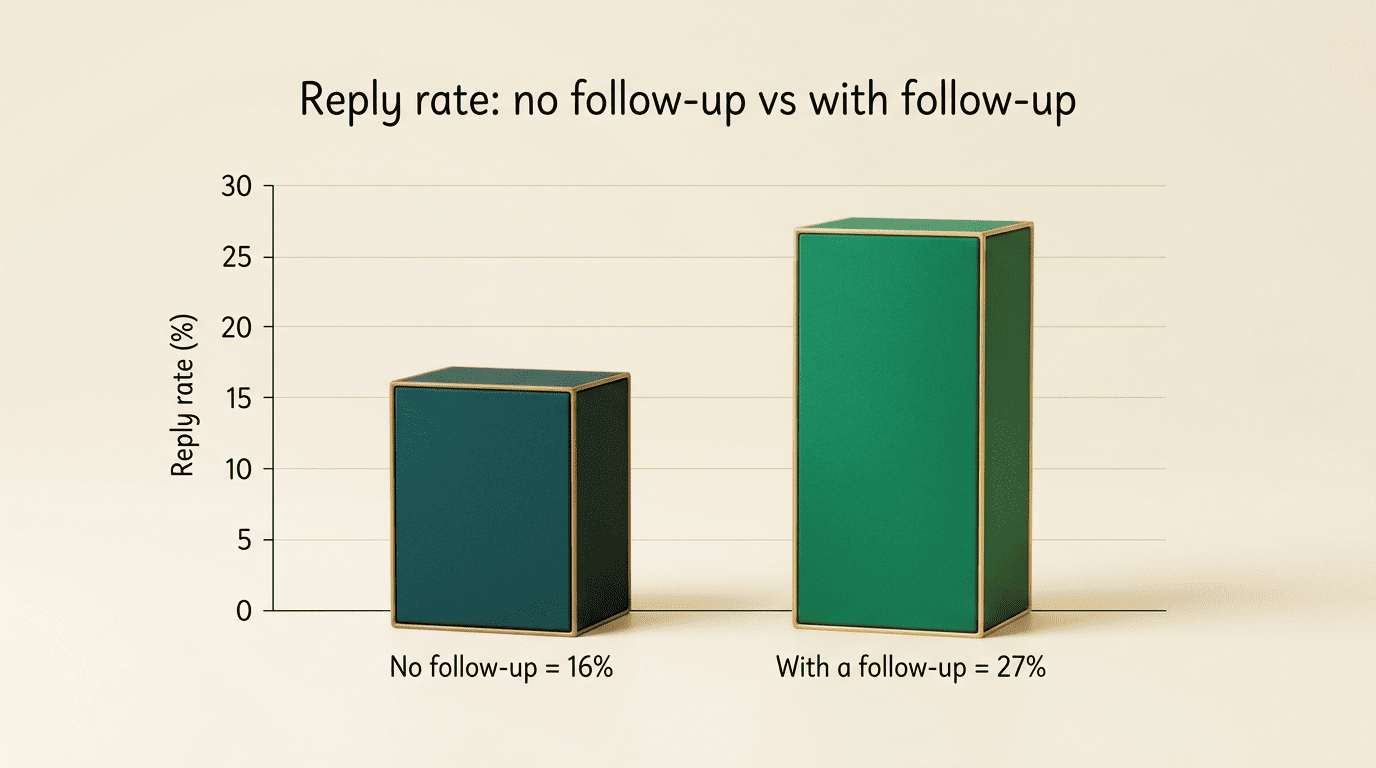
| Cold sequences that add a follow-up | reply rate roughly doubles, studies cite figures near 16% rising to 27% |
These numbers come from aggregated outreach and sales-engagement studies rather than a single controlled experiment, so treat them as directional rather than a guarantee for any specific list or subject line. The consistent pattern across sources is what matters: a second message, sent at the right interval, recovers replies the first email never got.
How to Write a Follow-Up Email With AI, Step by Step
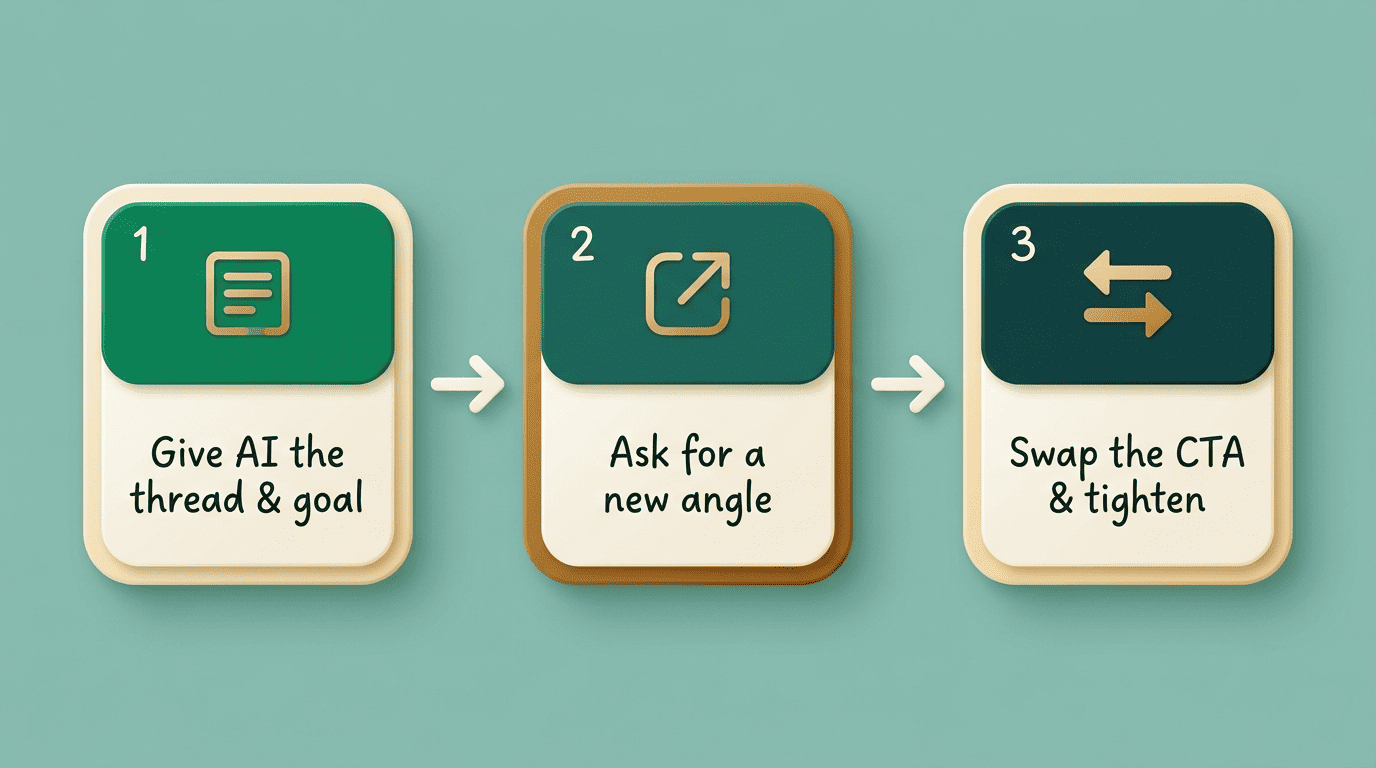
A follow-up drafted with an AI email generator takes three deliberate steps rather than one prompt-and-send.
- Give the AI the thread and the goal. Paste the previous email, or point the tool at the thread, and state your one goal for this message — a reply, a scheduled call, a signed document. The AI email generator needs that prior context to reference it directly instead of starting cold.
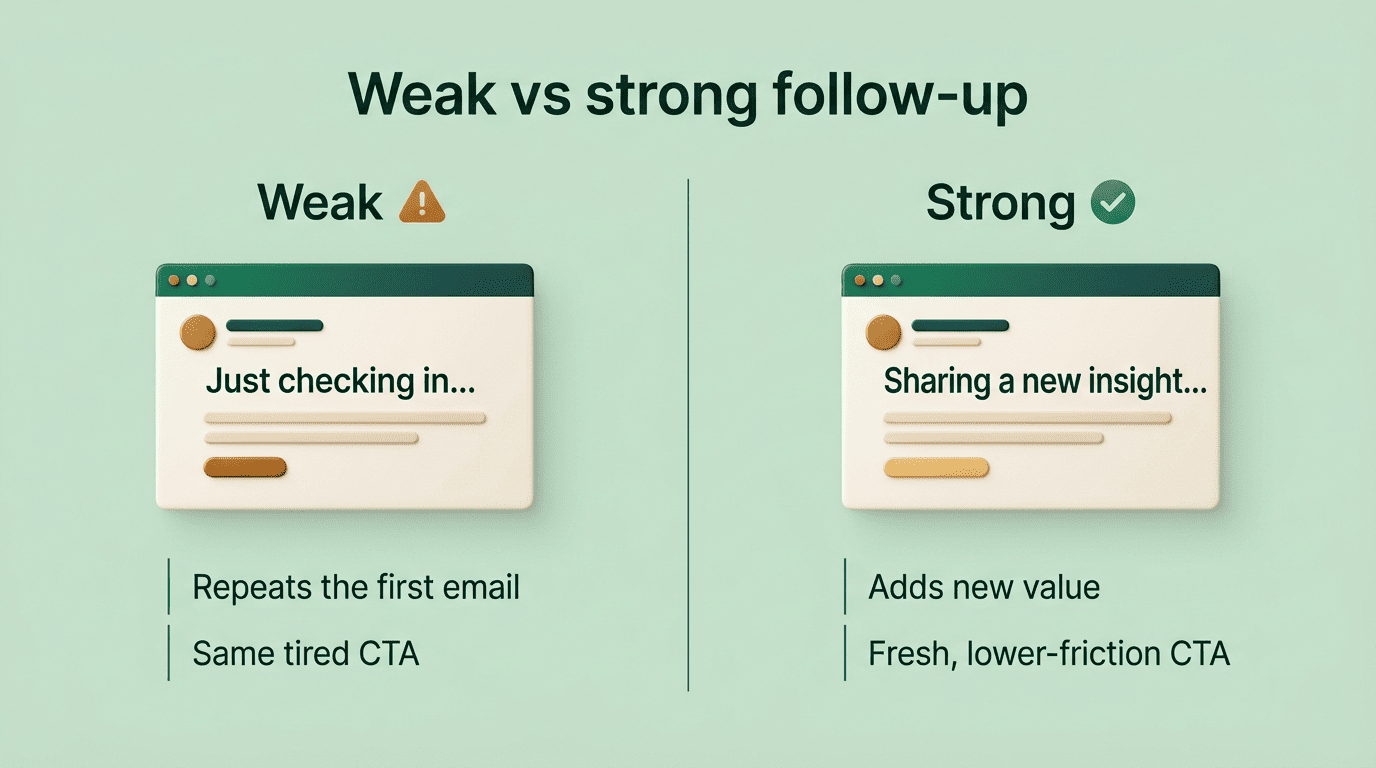
- Ask for a new angle, not a repeat. Tell the AI to add value — a new resource, a short case study, a different benefit — rather than restating the first email word for word. Recipients tune out anything that reads like «just checking in.»
- Swap the CTA and tighten the message. Ask for a different, lower-friction call to action than the first email used, and keep the whole draft short. Then edit it so it sounds like you before it goes out.
Whatever tool drafts the message, the send itself still has to follow basic mailbox hygiene. Gmail’s sender guidelines ask senders to keep spam complaint rates low and to make unsubscribing easy — rules that apply just as much to a follow-up as to the original email, since a poorly targeted sequence is exactly what triggers complaints.
How Long to Wait and How Many to Send
Timing
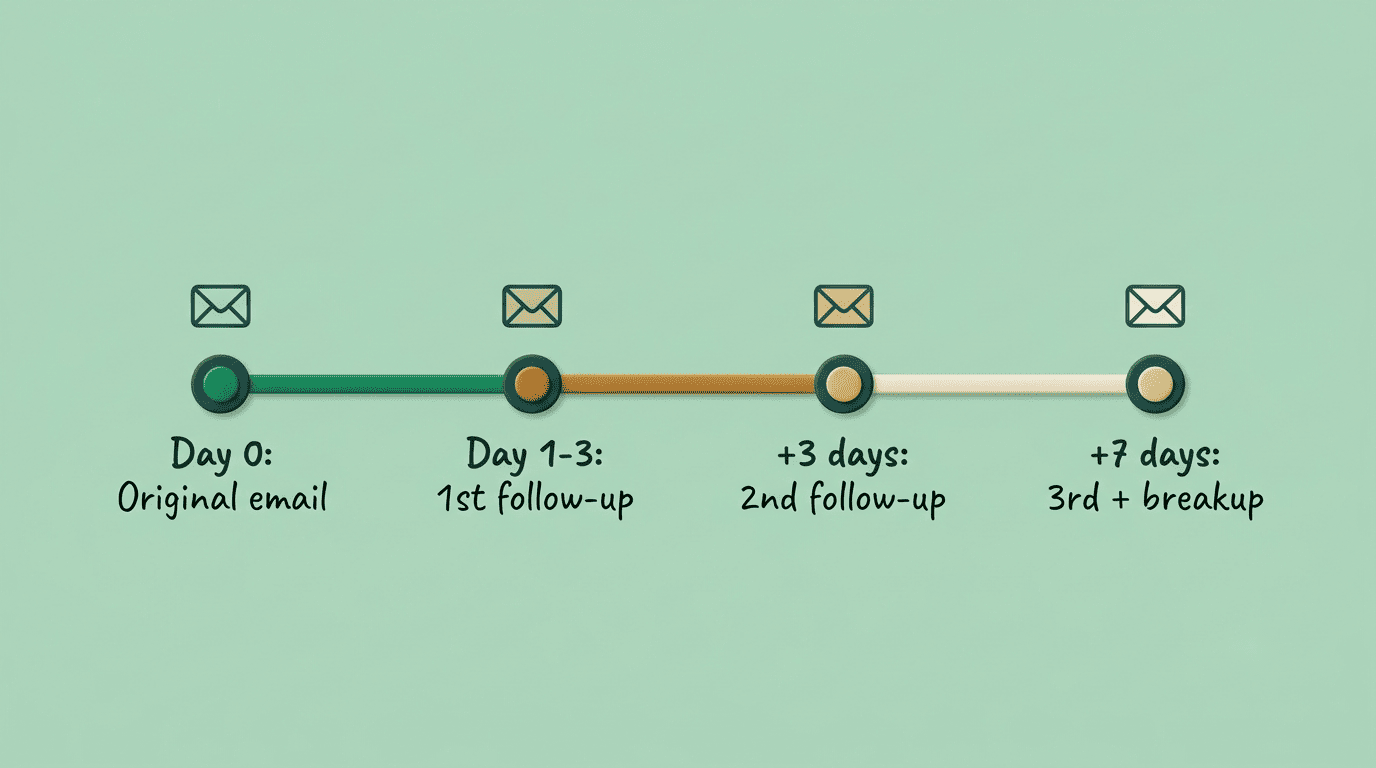
Send the first follow-up one to three days after the original message — long enough that it doesn’t feel like a ping, short enough that the context is still fresh. Space the ones after that further apart: roughly three days for the second, then about seven days for the third. After a job application or an interview, the clock runs differently — wait one to two weeks, or until any deadline the employer stated has passed.
| Follow-up | Typical wait | Best for |
|---|---|---|
| 1st | 1–3 days after the original | Any unanswered email |
| 2nd | ~3 days after the 1st | Cold outreach, sales |
| 3rd | ~7 days after the 2nd | Cold outreach, proposals |
| Post-interview / application | 1–2 weeks | Job applications, interviews |
How many
Two to three follow-ups is the sweet spot for most situations; reply rates measurably drop off after the fourth message, and a fifth or sixth mostly just annoys the recipient. When a cold sequence has run its course without a reply, close it with a short «breakup email» — a brief, low-pressure message that says you’ll stop reaching out, which occasionally gets a reply on its own.
Anatomy of a Follow-Up That Gets a Reply
Subject line and thread
Reply in the same thread for warm or ongoing conversations, so the full context travels with the message and the recipient doesn’t have to dig for what you’re referencing. For a fresh angle to a cold prospect, starting a new thread with a specific subject line can work better than reviving the old one. Either way, avoid putting the word «follow-up» in the subject line itself — it reads as a call-out and can make the email feel like a nag before it’s even opened.
Body and CTA
Keep the body short: the average professional receives well over a hundred emails a day, so a dense paragraph gets skimmed, not read. Briefly reference the last message, add one new piece of value, and end with a single clear CTA — not two or three options that force the reader to choose. A quick pre-send checklist:
- Does it reference the previous message or thread specifically?
- Does it add something new instead of repeating the first email?
- Is there exactly one CTA, and is it lower-friction than the last one?
- Is the subject line free of the word «follow-up»?
- Would this read as helpful, not as pressure, if you received it yourself?
Follow-Up Playbooks by Situation
Different situations call for a different tone and timing, and an AI email writer can switch between them instantly once you tell it the context.
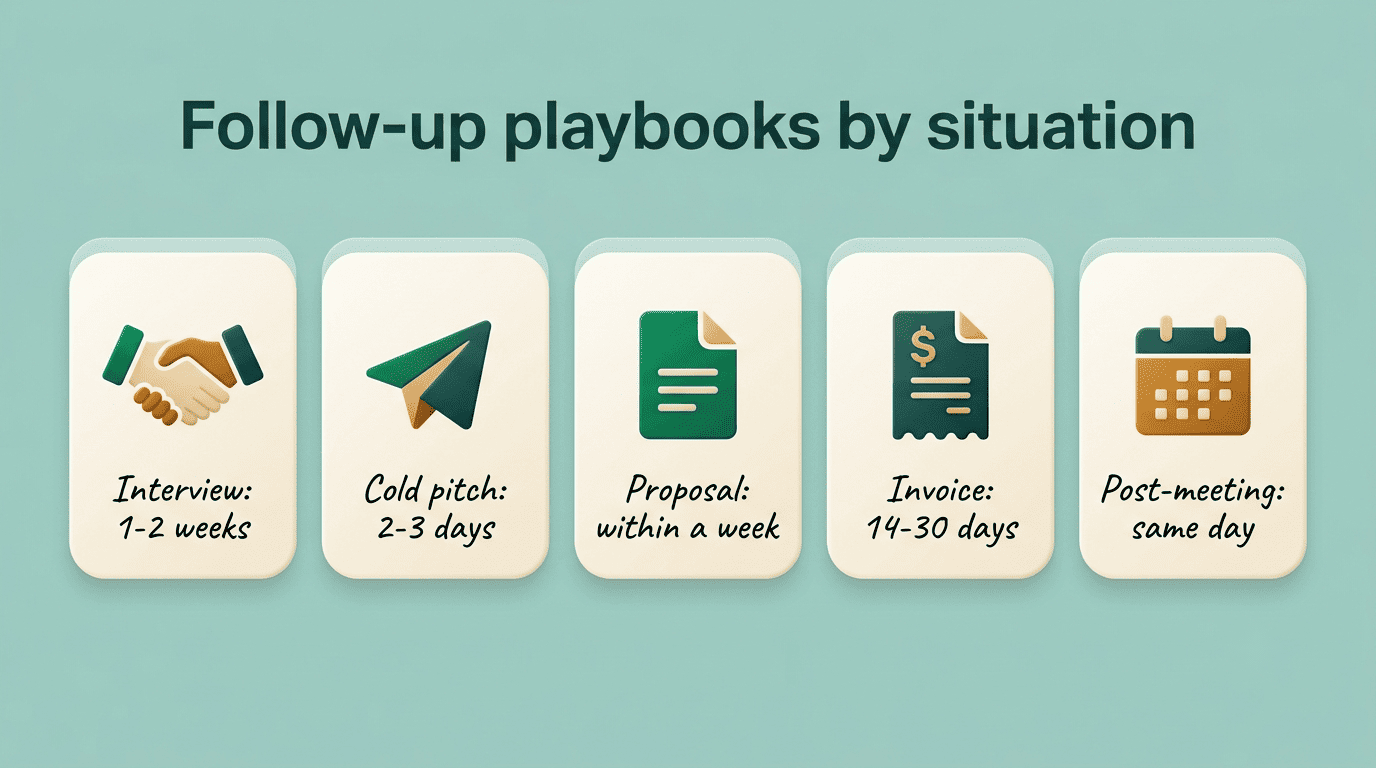
Quick reference before the detail:
- Interview — thank-you plus a concise nudge, 1–2 weeks
- Cold pitch — new angle, 2–3 days
- Proposal — within a week
- Invoice — 14–30 day buffer, neutral tone
- Post-meeting — same day or next day, built from notes
After an interview. Combine a short thank-you with a low-key nudge about next steps, sent within a day or two of the interview, then a follow-up 1–2 weeks later if you haven’t heard back and no deadline was given.
A cold pitch that got no reply. Lead with a new angle — a different benefit, a relevant resource, a specific reason you’re reaching out again — rather than repeating the pitch, and send it two to three days after the first attempt.
A proposal sitting unanswered. Check in within a week; proposals tend to get buried under other priorities rather than rejected outright, so a brief nudge is usually welcome rather than pushy.
An overdue invoice. Use a neutral, non-accusatory tone and give a buffer of 14 to 30 days before the reminder, since payment delays are often procedural rather than a refusal to pay.
After a meeting. Send a recap built from your notes — key points discussed and agreed next steps — the same day or the next morning, while the conversation is still fresh for the recipient too.
Mistakes to Avoid With an AI Follow-Up Email
The most common failure mode is treating the follow-up as a copy-paste of the original. A few habits account for most of the damage:
- Repeating the same email almost word for word instead of adding new value
- Dropping the CTA entirely, leaving the reader unsure what to do next
- Letting the tone slide into pressure or guilt-tripping after the second or third silence
- Sending AI-drafted copy unedited, without a pass to fix anything generic or off-tone
Each of those is easy to avoid once you’re watching for it — the difference between a draft and a message you’d actually send is usually one quick edit.
Don’t use deceptive subject lines.
Federal Trade Commission, CAN-SPAM Act: A Compliance Guide for Business
That rule from the FTC’s CAN-SPAM compliance guide applies directly to follow-ups: a subject line has to reflect the actual content of the message, not disguise a sales pitch as something else. For commercial follow-ups specifically, honor opt-out requests promptly and include a real physical address in the message — the sender is legally responsible for compliance, not the AI tool that drafted the copy.
FAQ
Related guides: writing cold outreach emails and replying to emails.